
Wing (1)
£20.00£25.00
In stock


Enter your email address below and we’ll notify you as soon as it becomes available.
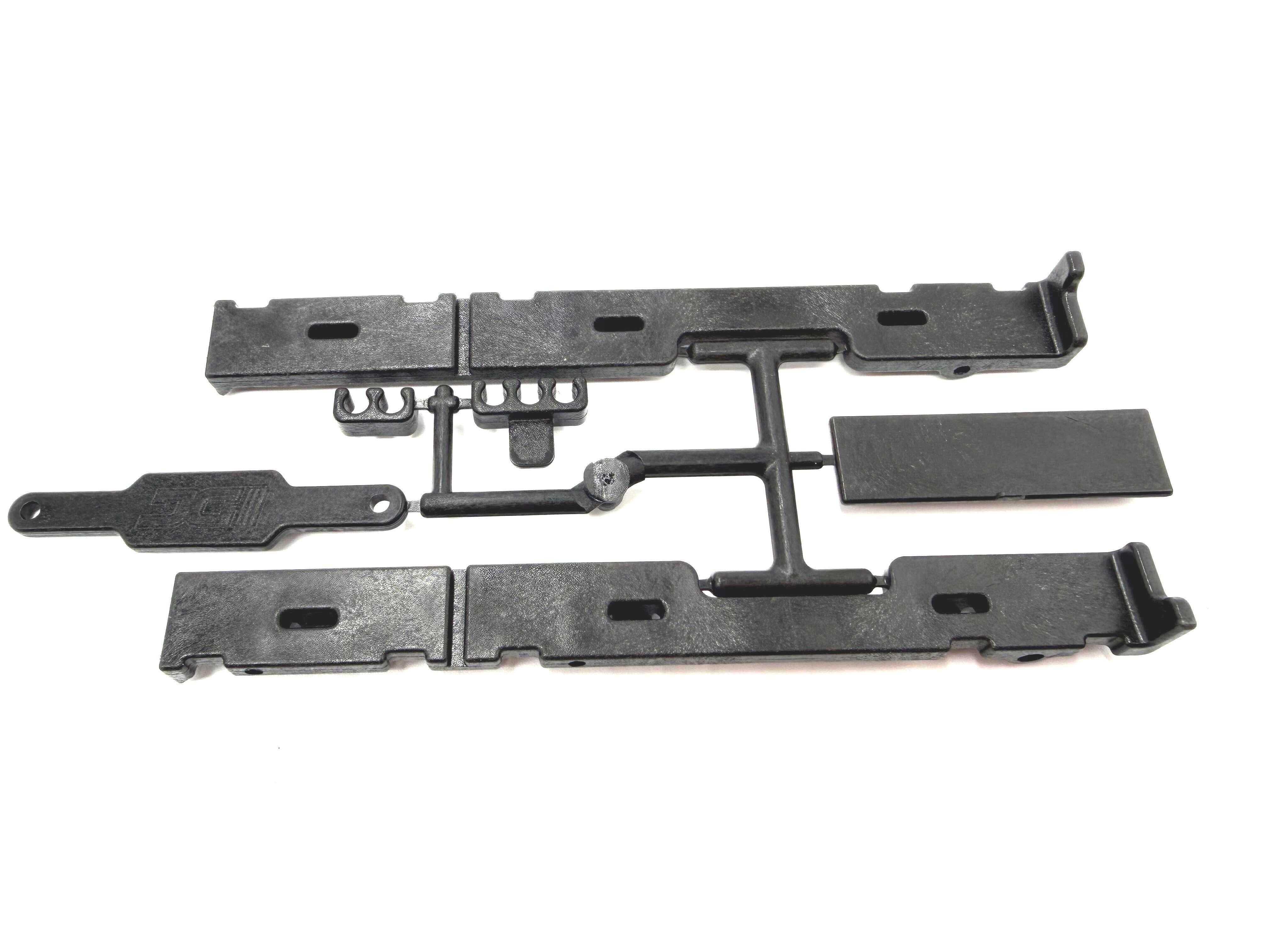
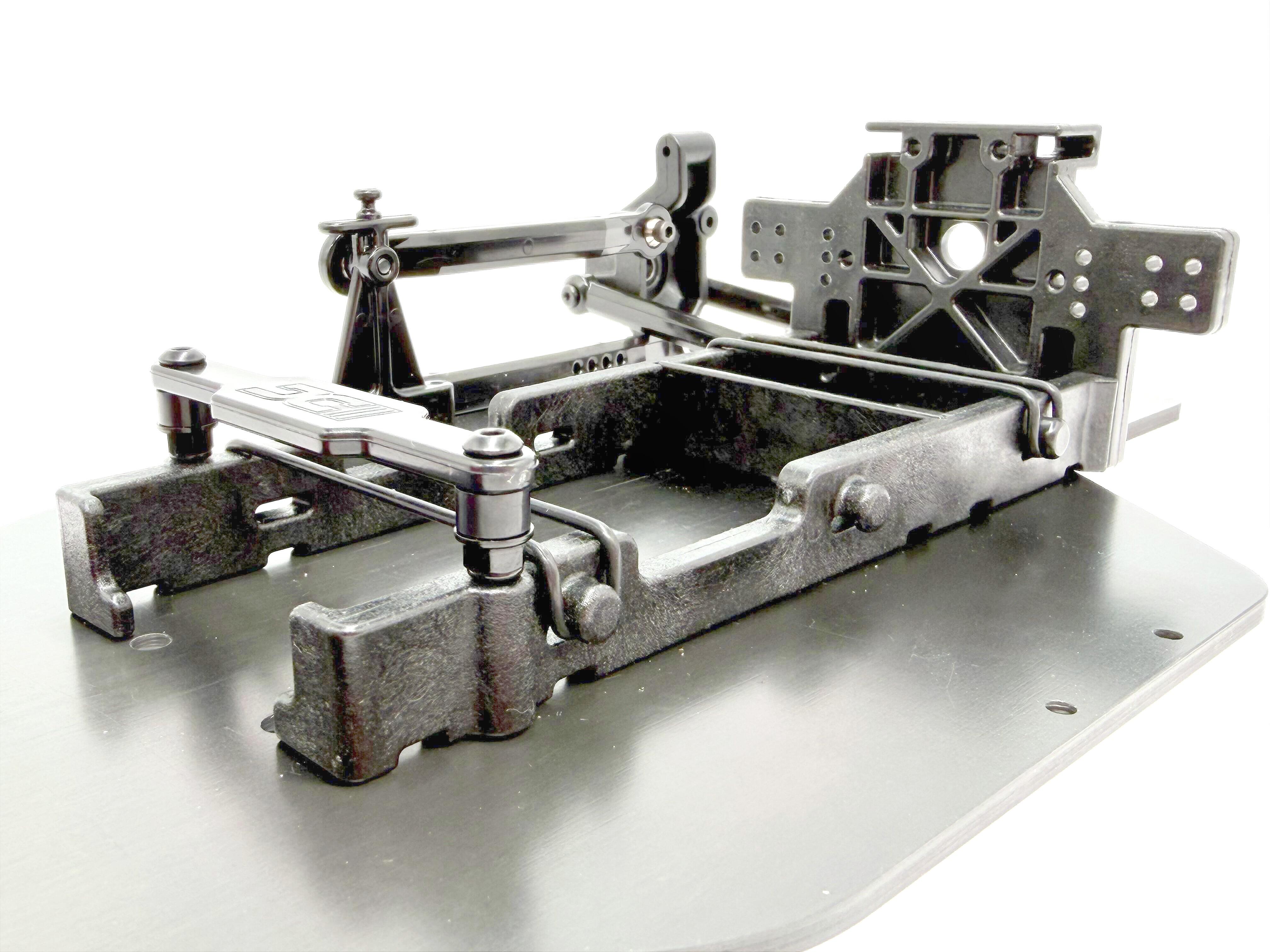
JRX2 Battery Cradle
Part No: JCS-0176
Overview:
The new JRX Battery Cradle is the latest addition to the JRX2 moulded parts range. Designed to pair seamlessly with the JC Racing moulded rear bulkhead, it creates a strong, unified rear-end setup for JRX2 vehicles.
Built for versatility, it supports a wide range of battery sizes. Use the included gate for shorty packs, adjust height with bands, or opt for a traditional battery brace for a retro look.
The cradle mounts directly to the JC Racing rear bulkhead (Part No: JCS-0175), improving strength and rigidity while maintaining the original geometry, enhanced with a modern JC Racing touch. Proven on Team Associated platforms, this concept is now available for the Team Losi JRX2 range.
Clean, functional, and adaptable.
Key Features
Included:
Manufacturers notes:
As with all vintage parts a certain amount of fit and finish maybe required.
Losi Release History
JRX2
Release Date: 1988
The buggy that started it all for Team Losi. The JRX2 introduced an innovative 5-link rear suspension, setting it apart from competitors at the time.
Unlike the Associated RC10, which featured a stamped aluminium chassis, the JRX2 was supplied with a graphite plate chassis, highlighting Losi’s early focus on performance and lightweight design.
This original platform went on to form the basis for three additional buggy variants and three trucks, establishing the foundation of the Losi racing lineup.
JRX2-Pro
Release Date: 1990
The JRX2-Pro was the direct evolution of the JRX2. It introduced longer front shocks, a design direction that was later reversed in subsequent models.
The original 5-link rear suspension was replaced with a solid H-arm, improving durability and consistency. Additional updates included a revised two-piece battery holder, stronger steering bellcranks, and a move from spoked wheels to solid wheels featuring the Team Losi logo.
The JRX2-Pro SE built upon the Pro platform with significant updates. Most notably, it introduced new swept composite front arms, improved shock towers, and a slipper transmission.
Later versions were also supplied with the retrofit XX transmission. The molded composite chassis offered two wheelbase options and should not be confused with the Junior 2 chassis—it is a different composite design with additional rear mounting holes to accommodate the extended wheelbase.
This model also featured revised shock cartridges, further improving suspension performance.
The Junior 2 was Team Losi’s first lower-cost buggy kit, designed to make competitive RC racing more accessible.
It introduced Losi’s first molded plastic chassis, replacing the flat graphite plates used in earlier models. Cost savings were achieved through the use of plastic shock towers, bushings instead of full bearings, and simple threaded-rod linkages.


